TABLE OF CONTENTS
What are SART codes?
SART codes are used to record sickness absences. Within Cintra iQ, you can import the SART codes into the Attendance Reason Lookup Table and Attendance Reason Codings Lookup Table.
this lets you easily classify employee sickness absence either from verbal reports, self-certificates, or from a medical practitioner via a medical certificate.
Once you have imported the SART Codes into the Lookup Tables, they will be available when creating an employer's Sickness Calendar Event. You can then report on the SART Codes when creating either a Listing report or a Payroll report.
How do I import SART codes?
- Go to: File > Import > Data Import. The Import File window appears.
- Select Lookups from the Data File drop-down list.
- Select a table to import to (e.g. Attendance Reasons).
- Click Table Columns button. The Table Columns appear.
- Any field name that is highlighted in red is a required field.
- Click OK.
- Select the Header Line Present option. This displays the source column headers as they look in the selected import file.
- Enter the Error Threshold. Note: It is recommended that you change the error threshold to 999 so that you know how many errors you have. You can then fix the errors and re-import the .csv file.
- Click the ellipsis button to browse and select your .csv file. This imports the file into the import file's source pane.
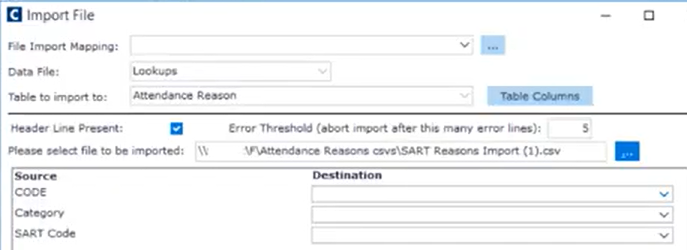
- Match the Source files to the relevant details in the Destination drop-down lists.
- Click Next. The SART codes will be listed in the pane.
- Click Import. Any errors will be shown in the Error Status column.
Viewing the SART codes in the lookup table
- In Cintra iQ's menu bar, click Definitions.
- Select Lookups.
- Select the relevant lookup table. The SART codes are displayed in the Lookup Values area below.
You can then report on the SART codes when creating either a Listing report or a Payroll report.

Was this article helpful?
That’s Great!
Thank you for your feedback
Sorry! We couldn't be helpful
Thank you for your feedback
Feedback sent
We appreciate your effort and will try to fix the article